Ask the expert
Moto

How to Change a Motorcycle Battery: Replacement and Installation Guide for Dirt Bikes

7 July 2025

Changing the battery in your motorcycle or dirt bike may seem like a simple task, but it requires attention to detail to ensure optimal performance and avoid damaging your bike’s electrical system. Whether you're an experienced rider or a new motorcycle owner, this step-by-step guide will walk you through the process of replacing and installing a motorcycle battery, with a particular focus on dirt bikes and their unique requirements. 

From understanding where your bike’s battery is located to selecting the right replacement — and maintaining the battery for long-lasting performance — we’ll cover the key steps you should follow for your bike’s electrical needs and to keep your ride running well.


Where Is the Battery on a Motorcycle or Dirt Bike?


The battery in most motorcycles is typically located under the seat or near the fuel tank, in easily accessible compartments designed for quick maintenance. However, dirt bikes, which are built for rugged off-road riding, often have batteries housed in more compact and less accessible locations. These bikes are designed with a focus on minimizing weight and protecting the electrical components from the harsh conditions of off-road environments.

In many dirt bikes, the battery may be tucked beneath panels or housed in compartments close to the frame, often hidden behind side covers or under the gas tank. The location can vary significantly depending on the model, as manufacturers tend to prioritize both weight distribution and durability. For example, some dirt bikes may place the battery in a high-mounted compartment to improve the bike's center of gravity and to reduce the risk of water or mud damage. On the other hand, some models opt for a lower, more centralized location to maintain better overall balance and to prevent the battery from being exposed to excessive shocks. These models often feature a more rigid compartment designed to protect the battery from extreme terrain impacts and ensure a more stable weight distribution.

The placement can make battery access and installing a motorcycle battery more challenging, especially if you're working on a bike with minimal clearance or without a dedicated battery compartment. For bikes designed for motocross, enduro, or trail riding, the battery is often mounted more securely to withstand the shocks and vibrations of rough terrains. These bikes typically feature a sealed, maintenance-free battery design, which reduces the need for regular maintenance but also makes the process of removal and replacement more complex.

Batterie GET

Why Should I Replace the Battery on My Motorcycle?


The primary indicators for battery replacement are failure to hold a charge, visible signs of wear such as leaking or swelling, or consistent failure to start the engine. For road bikes, which are typically used on paved roads and highways, the battery is designed to endure regular use, but it still faces wear and tear over time. Batteries are affected by heat, which is a common issue for motorcycles that are frequently exposed to sunlight or high temperatures. When a road bike’s battery nears the end of its life, it may start to show signs like slower engine cranking, dim lights, or difficulty starting. Batteries are also susceptible to depletion due to issues like parasitic drain — when electronics continue to draw power even when the bike is off. Timely replacement ensures your bike’s electrical system remains efficient and your riding experience remains good.

On the other hand, dirt bikes face even greater battery strain due to their rugged use. The intense vibrations caused by rough terrain, combined with frequent exposure to mud, water, and extreme shifts in temperature, accelerate the degradation of the battery, leading to unreliable starts or complete failure during a ride.

In general, when the battery is no longer functioning optimally, it can lead to a number of electrical issues, including voltage drops, poor performance, and in the worst-case scenario, complete electrical failure. Voltage drops can lead to weak starting power or can even damage the electrical system by causing erratic performance. This can also cause problems with components like the lights, fuel injection system, and ignition coil, leading to further damage and costly repairs. By replacing the battery before it fails completely, you not only prevent breakdowns but also safeguard the integrity of the bike’s electrical components.


How to Change a Motorcycle Battery Step by Step


Changing the battery on a motorcycle is generally a straightforward task that most riders can handle themselves, provided they follow the correct steps and take necessary safety precautions. However, if you are not confident, it is a good idea to consult a mechanic. For road bikes, the process is typically simple and can be done without special tools. Dirt bikes present unique challenges due to their compact design. These bikes require extra care during installation to ensure the battery is securely mounted and able to withstand vibrations, impacts, and environmental factors. While it’s often possible to replace the battery yourself, professional assistance may be needed if the bike’s design complicates access, removal, or installation. 

Here is a step-by-step guide to replacing a motorcycle battery:

  1. Turn off the bike and remove the key. Ensure the ignition is completely off to avoid any electrical mishaps before starting.

  2. Disconnect the negative terminal (-) first, followed by the positive terminal (+). This prevents any risk of short circuits during removal or installation. 

  3. Remove brackets, straps, or covers that are holding the battery in place. These may vary depending on the bike model. 

  4. Carefully lift out the old battery. If there is corrosion on the terminals, clean them thoroughly with a wire brush and a baking soda solution before proceeding. 

  5. Check the cleanliness of the housing and clean carefully to remove any residual dust or dirt.

  6. Insert the new battery. Ensure it is the correct size, voltage, and orientation for your bike. Double-check your bike’s manual for specifications. 

  7. Reconnect the terminals, starting with the positive (+) and covering it with the specific cap, then the negative (-). Always ensure they are securely fastened to prevent power loss. 

  8. Secure the battery. For dirt bikes, it’s crucial that the battery is tightly fastened to avoid movement during rough riding conditions. 

  9. Start the bike. Verify that the electrical system is functioning correctly — check that the lights are working, the bike starts easily, and the electrical system is stable. 


Remember to always wear protective gloves and eye protection when handling batteries: you need to protect yourself from potential battery acid burns, especially if corroded battery terminals are visible. Also, dispose of old batteries at a certified recycling center.


Common Mistakes to Avoid When Installing a Motorcycle Battery


Improper battery installation can lead to electrical issues, safety hazards, or performance problems. This is particularly important for dirt bikes, where rough terrain and constant vibrations can exacerbate any installation errors. Here are some common mistakes and potential consequences: 

  • Using an incompatible battery: Installing a motorcycle battery that doesn't match your bike’s specifications can cause poor fit or insufficient power delivery, leading to starting issues, electrical malfunctions, or even permanent damage to the electrical system due to voltage discrepancies. 

  • Leaving terminal bolts loose: This can lead to intermittent power loss, engine stalls, or arcing. Over time, this can cause corrosion and severe damage to the terminals, potentially requiring expensive repairs. 

  • Not cleaning the terminals: Battery terminals can accumulate corrosion, which impedes the flow of electricity. Corrosion reduces the battery’s efficiency, making it harder for the bike to start. This can lead to weaker electrical systems and performance.

  • Skipping pre-charging: Some battery types, especially Absorbant Glass Mat (AGM) and lead-acid batteries, require a full charge before installation. Failing to pre-charge the battery can shorten its lifespan, reduce performance, and cause it to discharge faster than expected. If you wonder how to charge a dirt bike battery, simply use a battery charger. 

  • Not securing the battery properly: A battery that isn't securely mounted can shift or disconnect while riding, especially in rough, off-road conditions. This can cause physical damage to the battery, lead to electrical disconnections, or even create sparks that could result in a fire hazard.

  • Forgetting to reset onboard electronics: After replacing the battery, certain motorcycles, especially newer models with advanced electronics, may require a reset of the system. Forgetting to reset may result in malfunctioning lights, erroneous warning signals, or complete failure of onboard systems.


What Happens If You Connect Positive to Negative on a Motorcycle Battery?


It is important to note that reversing the polarity — connecting the positive terminal to the negative terminal or vice versa — can have serious and immediate consequences for your motorcycle's electrical system. When the battery terminals are connected incorrectly, it creates a short circuit, causing a surge of electrical current that the system is not designed to handle.

This can lead to several issues:

  • Damaged electronic components: Modern motorcycles, especially those with complex onboard electronics, rely on a precise electrical flow to function. Reversing the polarity can cause critical components such as the Engine Control Unit (ECU), sensors, and control modules to short out, potentially rendering them completely inoperable.

  • Blown fuses: Most motorcycles have fuses designed to protect electrical circuits from damage due to excessive current. When the polarity is reversed, the increased current can blow fuses immediately, cutting power to vital systems like ignition, lights, or fuel injection. In many cases, replacing these fuses will not resolve the underlying damage caused by the incorrect connection. 

  • Irreparable harm to the electrical system: Prolonged exposure to reversed polarity can permanently damage the motorcycle’s electrical system. This may result in a range of issues, from erratic electrical performance to total failure of vital systems, leading to expensive repairs and potential replacement of major components. 

  • Battery damage: Reversing the battery terminals can also harm the battery itself. It may cause internal short circuits within the battery, reducing its lifespan or even causing it to fail entirely. In some cases, the battery may overheat, leak acid, or swell, posing a safety hazard. 

In summary, connecting the positive terminal to the negative can have severe, long-lasting consequences for your motorcycle. If you suspect you’ve connected the terminals incorrectly, it’s crucial to disconnect the battery immediately and inspect the system for damage. If in doubt, consult a professional mechanic to avoid further harm to your bike’s electrical components.

batterie

How Often Should You Change a Motorcycle Battery?


The lifespan of a motorcycle battery typically ranges from 2 to 5 years, but this can vary based on several factors, including the type of battery, how often the bike is used, and the environmental conditions it’s exposed to. Regular riding, proper maintenance, and ideal storage conditions can extend a battery’s life, while harsh conditions can accelerate wear.

For dirt bikes, batteries wear out faster due to exposure to rough terrain, extreme temperatures, mud, and water. A replacement is often needed every 1 to 2 years. In contrast, road bike batteries typically last 4 to 5 years, but can degrade faster in hot climates or with extended exposure to sunlight, requiring earlier replacement.

To ensure you’re replacing the battery at the right time, it’s a good practice to check the battery’s voltage regularly. A healthy, fully charged motorcycle battery typically reads around 12-13 volts when the bike is off. If the voltage consistently drops below 12 volts, it may be time to replace the battery. Additionally, inspecting the condition of the terminals for signs of corrosion or wear can help determine if the battery is still in good shape.


Battery Maintenance Tips


Proper battery maintenance is essential for extending its lifespan and ensuring optimal performance, especially for dirt bikes that are subjected to harsh off-road conditions. Regular upkeep will also help prevent unexpected failures and maintain the reliability of your bike's electrical system.

Charge the battery regularly: If your bike sits unused for a period, especially during the off-season, it's crucial to keep the battery charged. When learning how to charge a motorcycle battery, remember to use a battery maintainer to prevent the battery from discharging completely. This helps maintain battery health and ensures it's ready to go when you need it.

GET batterie

Choose the Right Battery for Your Motorcycle or Dirt Bike


When selecting a replacement battery for your motorcycle, it’s crucial to ensure that it matches your bike’s specific requirements. Here are some common specifications to check:
  • Voltage: Most motorcycles use a 12V battery, but it’s important to check the manufacturer’s specifications to ensure compatibility.
  • Capacity: This is measured in amp-hours (Ah) and indicates how much charge the battery can hold and how long it can power your bike’s electrical systems. 
  • Physical size: The correct size of the battery is essential to ensure it fits securely in the battery compartment without any risk of shifting. 
 
When selecting a replacement battery, the two most common options are lead-acid and lithium batteries, each offering distinct advantages depending on the bike’s specific requirements. 
 
For road bikes, lead-acid batteries are a popular choice due to their durability, vibration resistance, and low maintenance needs. 
 
For dirt bikes, lithium batteries are emerging as a top choice, although more expensive than traditional lead-acid batteries. Their lightweight design significantly reduces the bike's overall weight, which is crucial for off-road performance. They also offer fast charging times, high energy density, and superior vibration resistance.


GET’s Lithium Motorcycle Batteries for Dirt Bikes


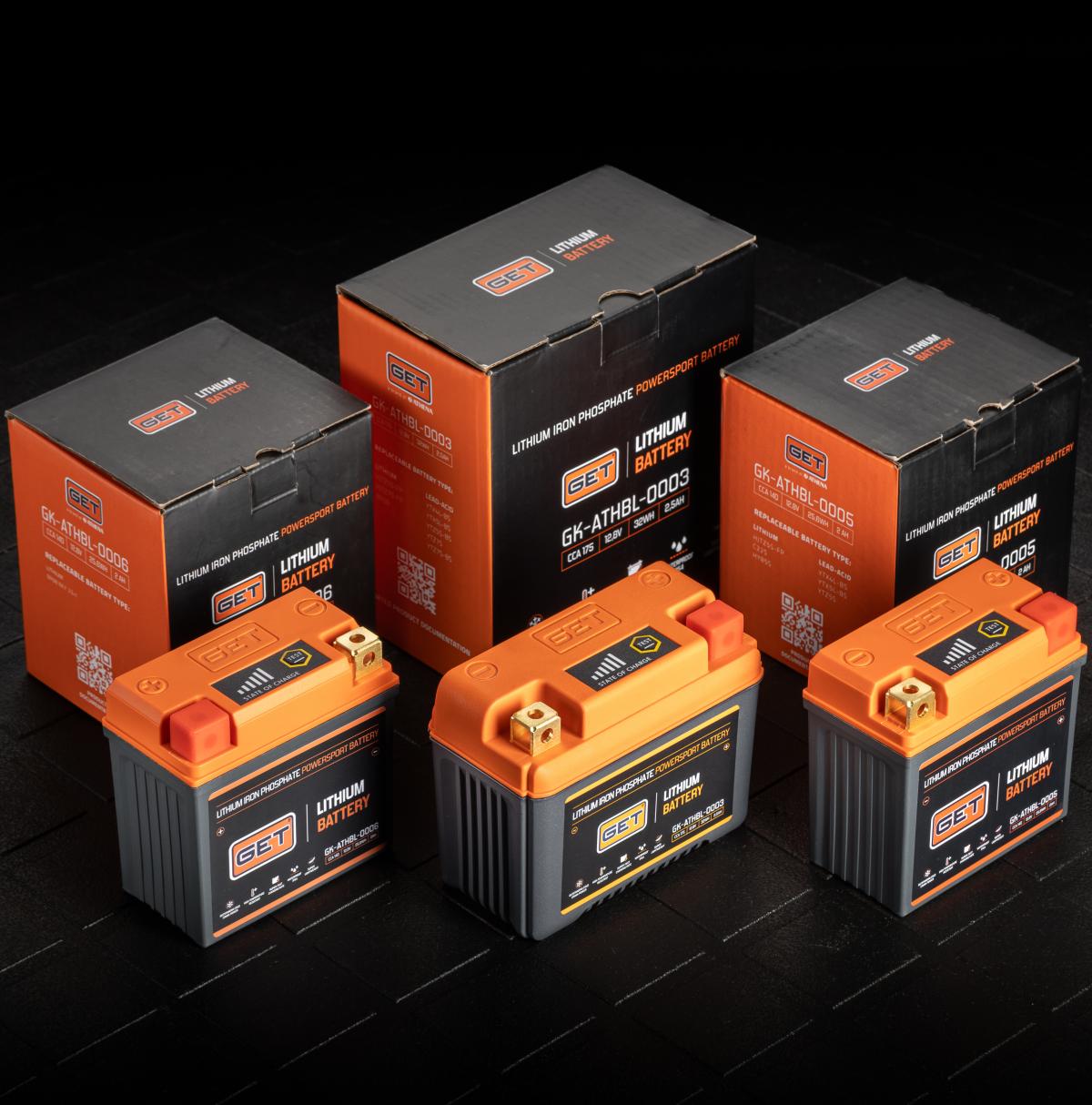
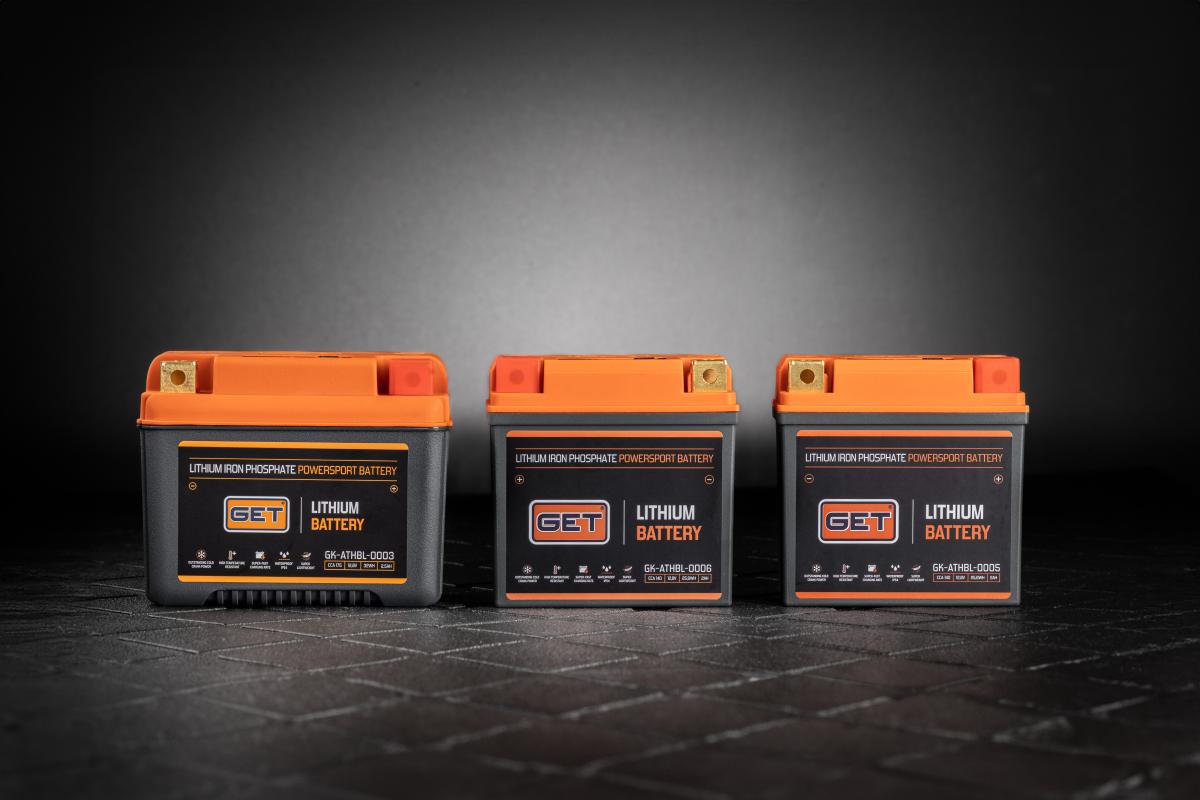
GET of Athena offers a range of lithium motorcycle batteries specifically designed for motocross and enduro enthusiasts. These lightweight and compact batteries are perfect for reducing bike weight while delivering reliable starting power in the toughest off-road conditions.

Their sealed construction ensures leak-free performance, and they are built to withstand the shocks and vibrations typical of off-road riding. GET’s lithium batteries stand out for their innovative design, cutting-edge technology, and exceptional performance. 

They are equipped with exclusive protective resin technology, providing superior cell stability, optimal conductivity, superior thermal insulation, and effective shock absorption. These advanced features not only extend battery life but also optimize efficiency, ensuring flawless starts even on the coldest days.

GET’s lithium batteries are compatible with a wide variety of models, making them the ideal choice for dirt bike riders looking for a durable, dependable, and high-performance battery. Ask your mechanic if you need assistance installing the motorcycle battery. 

Check out GET's range of revolutionary lithium motorcycle batteries here
 

Modificato il 16 February 2026