

How the quick shift system works: pros and cons on motorcycles
In recent years, the quick shift system has gone from being a technology reserved for race bikes to an increasingly common feature on road, naked and off-road models. Today, many riders look for it not only for performance reasons, but also to improve riding smoothness and overall riding pleasure.
The so-called electronic gear shifting system for motorcycles allows riders to change gear without using the clutch and without closing the throttle, making each shift faster and more continuous. On paper, it is a solution that promises a sportier ride with fewer interruptions during acceleration.
But is the quick shifter really useful in everyday riding? How exactly does it work? Can it always be used, or are there situations where it is better to avoid it? And, above all: can the quick shifter damage a motorcycle gearbox?
In this guide, we take a closer look at how an electronic motorcycle gear shifting system works, its pros and cons compared with a traditional gearbox, and when it is really worth using, whether on the road, on the track or off road.
What is a quick shift system and what is it used for?
A motorcycle quick shift system is an electronic system designed to allow the rider to shift up to the next gear without using the clutch and without closing the throttle.
In real riding terms, this means keeping the throttle open while changing gear, with a much smoother feeling than a traditional shift.
This technology was born in motorsport, where even a few hundredths of a second during a gear change can make a difference. Today, the quick shifter is also widespread on road bikes because it makes acceleration more continuous and the ride smoother. On sport bikes the advantage is felt especially when exiting corners and during hard acceleration, while on naked bikes and touring motorcycles it mainly improves comfort. It is also gaining ground off road, particularly on fast or flowing sections, where it helps maintain stability and traction.
In practice, the quick shifter is not only about going faster: above all, it makes gear changes quicker, smoother and less “interrupted”.

Difference between electronic and manual gear shifting
To really understand what changes, it is worth starting from how a traditional gearbox works.
With a classic manual system, every gear change requires 5 coordinated operations:
close the throttle
pull the clutch
engage the next gear
release the clutch
open the throttle
It is an automatic gesture for any rider, but it still involves a brief interruption in engine drive, with a resulting load transfer to the front wheel.
With a motorcycle quick shifter, much of this process is managed electronically. The rider can keep the throttle open and simply operate the gear lever: the pressure applied activates the dedicated sensor, which sends a signal to the control unit. The ECU then intervenes quickly and precisely, allowing the gear to engage without using the clutch.
The difference is felt especially in sporty riding: the bike remains more composed, acceleration is continuous and the gear change is faster. It is a feeling many riders describe as cleaner and more direct, especially when riding dynamically.
This does not mean, however, that the traditional shift is outdated. Some riders still prefer it because it offers greater involvement in the ride and more direct control of the motorcycle, especially during slow manoeuvres or in more technical situations.
In short, the comparison between an electronic and a traditional motorcycle gear shift depends very much on the type of use and on personal preference.
How does a motorcycle quick shift system work? The components
The operating principle behind a quick shift system is simpler than it may seem.
When you change gear normally, the gears in the gearbox are under load because of the torque transmitted by the engine. To allow the next gear to engage, the gearbox must therefore be momentarily “unloaded”.
In a traditional system, this happens by closing the throttle and using the clutch. In an electronic motorcycle gear shifting system, however, everything is managed by the electronics.
At the heart of the system is a gear position sensor. When the rider applies pressure to the lever to engage the next gear, the sensor detects the movement and sends a signal to the motorcycle’s electronic control unit (ECU).
At that point, the ECU cuts ignition or fuel injection for just a few milliseconds - the so-called ignition cut or fuel cut.
This micro-interruption is enough to remove load from the gears and allow the next gear to engage without using the clutch.
This is exactly where the difference between a well-calibrated system and a cheaper or less refined one becomes clear. A properly tuned quick shifter makes the shift almost imperceptible, while a less precise system can feel harsh or not very smooth.
The quality of the sensor, the speed of the control unit and the correct calibration of the engine cut have a major impact on the final riding feel.
Difference between quick shifter and auto blipper
The terms quick shifter and auto blipper are often used as synonyms, but they actually refer to two different functions.
The quick shifter mainly works during upshifts, so when accelerating. It allows the rider to engage the higher gear without closing the throttle and without using the clutch.
The auto blipper, on the other hand, comes into play during downshifts. In this case, the system automatically manages the throttle blip needed to synchronise the engine with the lower gear and prevent harsh reactions from the motorcycle.
On more advanced motorcycles, the two systems work together, allowing both upshifts and downshifts without using the clutch. It is a solution that is highly appreciated especially on track, where smooth and fast gear changes have a direct impact on riding.
When to use the quick shifter
Understanding how to use the quick shifter correctly is essential to really take advantage of its benefits.
On the road, it performs best during hard acceleration, overtaking and flowing riding, where it allows the next gear to be engaged without interrupting engine drive. In city traffic or at low speeds, however, the advantage is less noticeable and using the clutch may feel more natural.
On track, the quick shifter expresses its full potential because it works in ideal conditions: high revs, open throttle and closely spaced gear changes. It can also be useful off road on fast sections or on more flowing terrain, while in technical sections many riders prefer to maintain direct control of the clutch.
Does the quick shifter damage the motorcycle gearbox?
This is probably the most common concern among riders approaching this technology.
The short answer is no: a well-designed and correctly used quick shift system does not damage the motorcycle gearbox.
In fact, in the right conditions it can even make gear changes more precise and consistent than manual shifts.
System quality makes a big difference. A well-developed quick shifter works with precise intervention times calibrated for the motorcycle, while cheap or poorly installed systems can compromise smoothness and reliability.
Maintenance of the motorcycle electronic gear shifting system
An electronic motorcycle gear shifting system does not require particularly complex maintenance, but a few periodic checks are important to keep it efficient over time.
One of the elements that should be checked most carefully is the sensor connected to the gear shift rod. It must be properly secured and work without play or abnormal movement, because even a small inaccuracy can affect shift quality.
Wiring and electrical connections also deserve attention, especially on motorcycles used off road or in difficult conditions, where dirt, vibration and moisture can affect system operation.
Some warning signs that should not be underestimated are:
gear changes that feel harsher than usual
irregular engine cuts
false neutrals
delays in shifting
In these cases, it is advisable to check the system before the issue can affect the transmission.
As is often the case, component quality makes the difference. A well-designed and correctly installed system ensures not only better performance, but also greater long-term reliability.
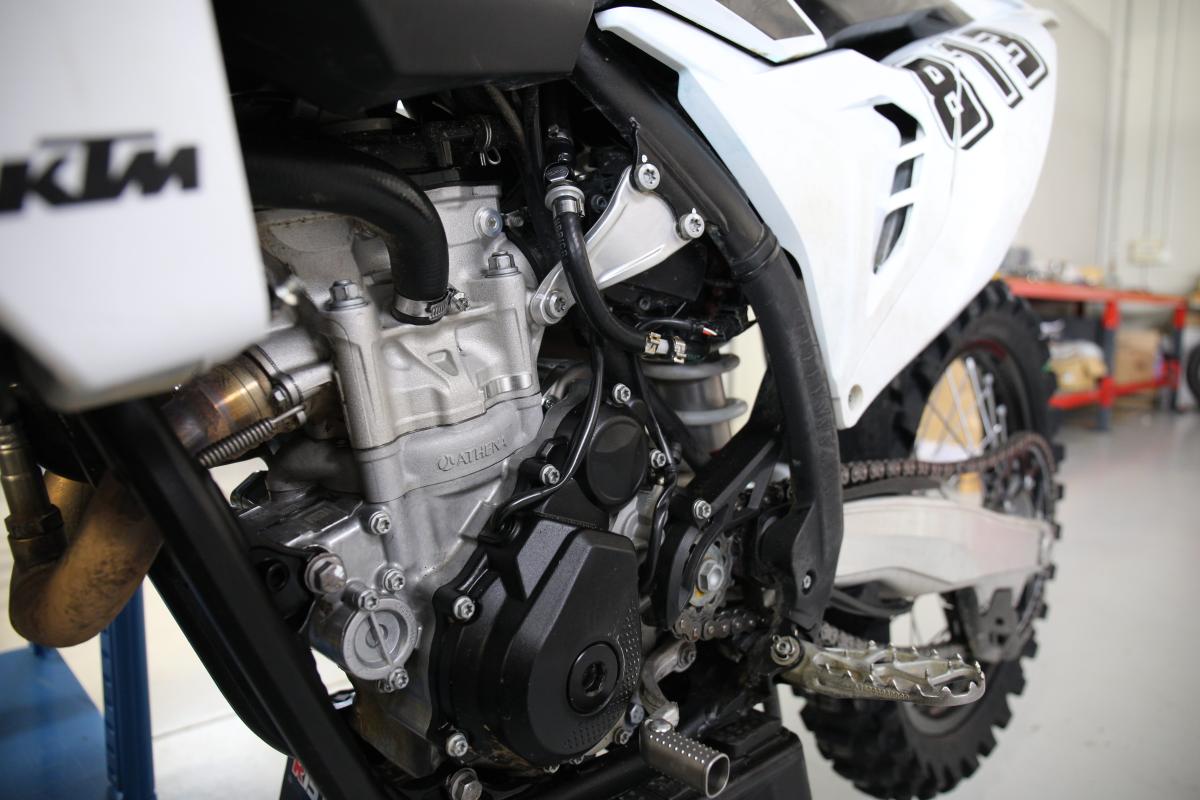
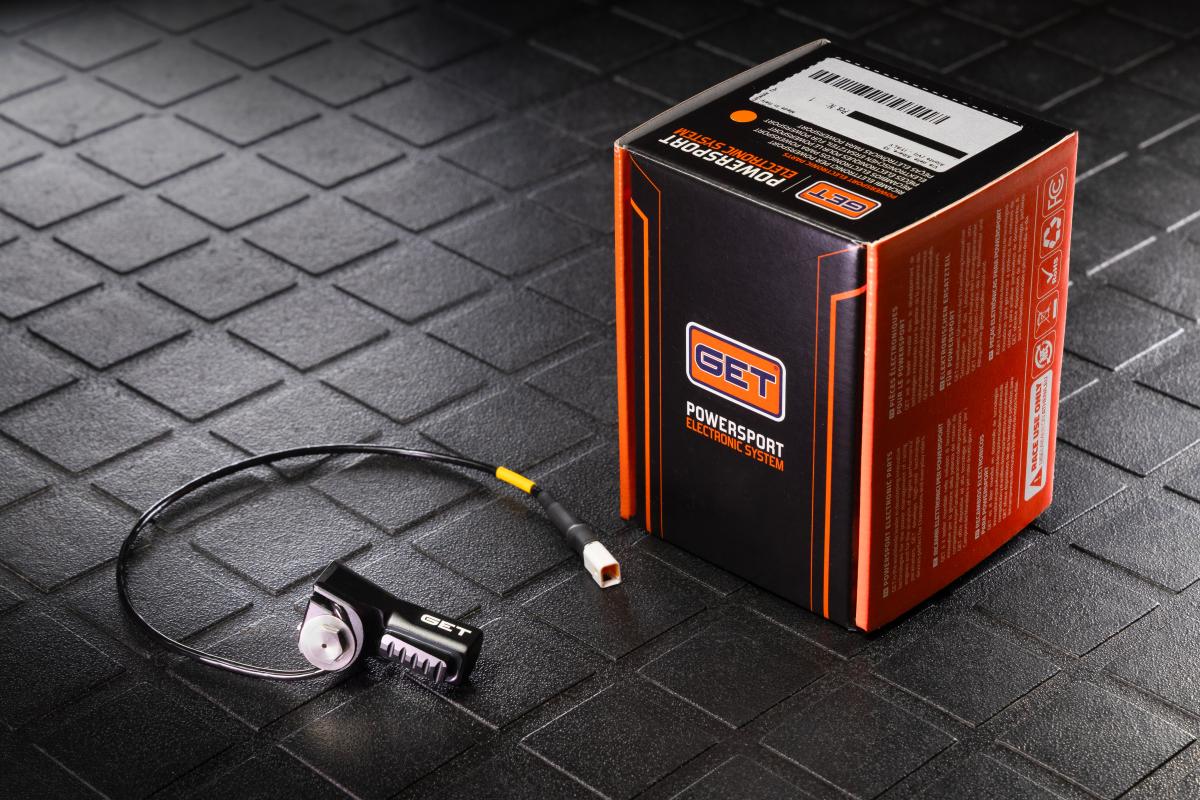
GET quick shift: components and systems for electronic gear shifting
To achieve a smooth and precise gear change, simply installing a quick shifter is not enough: sensor quality, electronic management speed and correct integration with the motorcycle make a significant difference.
These are exactly the areas GET focuses on, as Athena’s electronics division dedicated to developing solutions for controlling and optimising motorcycle performance. The GET quick shifter system is designed to offer fast response times, a stable signal and precise intervention even under intense use, from the track to off road.
Through the dedicated GET app, it is also possible to adjust the cut time, adapting the behaviour of the electronic gear shifting system to the rider’s needs, the type of motorcycle and the riding context. Correct calibration therefore helps achieve a more natural and progressive gear change, reducing the risk of harsh or inconsistent intervention and improving the feeling of control while riding.
FAQ on motorcycle quick shift systems
Does the quick shifter work on all motorcycles?
No, not all motorcycles are set up to use a quick shifter, especially older models or bikes with simpler electronics. On modern motorcycles, however, the system is often already fitted as standard or prepared for aftermarket installation.
In general, compatibility mainly depends on the motorcycle’s electronics and on the type of gearbox installed. Before purchasing a quick shifter kit, it is always important to check the specific compatibility with your model.
Can an electronic gear shifting system be installed aftermarket?
Yes, today there are several aftermarket systems that allow riders to add a quick shifter even to motorcycles that do not have one as standard.
Installation, however, is not the same for every model: some motorcycles simply require the sensor and control unit to be connected, while others need more specific electronic configurations.
For this reason, it is always advisable to rely on quality components and expert installers. A well-calibrated system makes a big difference in shift smoothness and long-term reliability.
Can the quick shifter be used at low revs?
Technically yes, but it is not the ideal situation.
The quick shifter works best when the engine is accelerating and slightly “under load”, which is the condition the system is designed for. At very low revs or with the throttle only slightly open, many ECUs may limit or disable quick shifter intervention to avoid poorly executed gear changes.
Is the quick shifter useful for beginner riders too?
It can be, because it also helps reduce coordination errors between throttle, clutch and gear lever.
That said, the quick shifter does not replace riding technique. It is always important to first learn how to use the traditional gearbox correctly and understand how the motorcycle behaves in different situations.
Once the rider is familiar with it, the electronic gear shifting system can become a very enjoyable support both in sporty riding and in everyday use.
Modificato il 03 July 2026


Ask the expert
-
 Ask the expertMoto
 -
 Ask the expertAuto
 -
 Ask the expertMoto