

Perfect Garage: essential tools for DIY maintenance
For motorcycle enthusiasts, setting up an adequate garage is a true mission. Taking care of your bike not only maintains its performance and ensures a good level of safety but also creates a special bond with the vehicle. DIY maintenance offers the opportunity to better understand your motorcycle, comprehend its workings, and experience the satisfaction of a job well done.
In this article, we'll outline the essential tools you'll need to build your personal workshop kit. Whether you're a beginner or a seasoned motor enthusiast, this guide is for you.
Basic Tools: The Foundation of the Kit
For those just starting out, it's crucial to have a set of basic tools that allow for common maintenance operations. Here are the indispensable tools to begin with:
Motorcycle Stand
Let's start with the motorcycle stand: a metal support designed to keep the motorcycle perpendicular to the floor. Its function is to lift the motorcycle and allow the wheels to be off the ground, facilitating work on the lower parts and allowing the wheels to spin freely, which is not possible with a regular lift as the wheels remain on the surface. It is very useful for storage as it prevents tire flat spots caused by the motorcycle's weight during long periods of inactivity.
There are different types of stands, each suited to different types of motorcycles and tasks, like the central stand shaped like a stool or the enduro stand, made from materials such as steel and aluminum, each with different levels of solidity and price.
Sockets
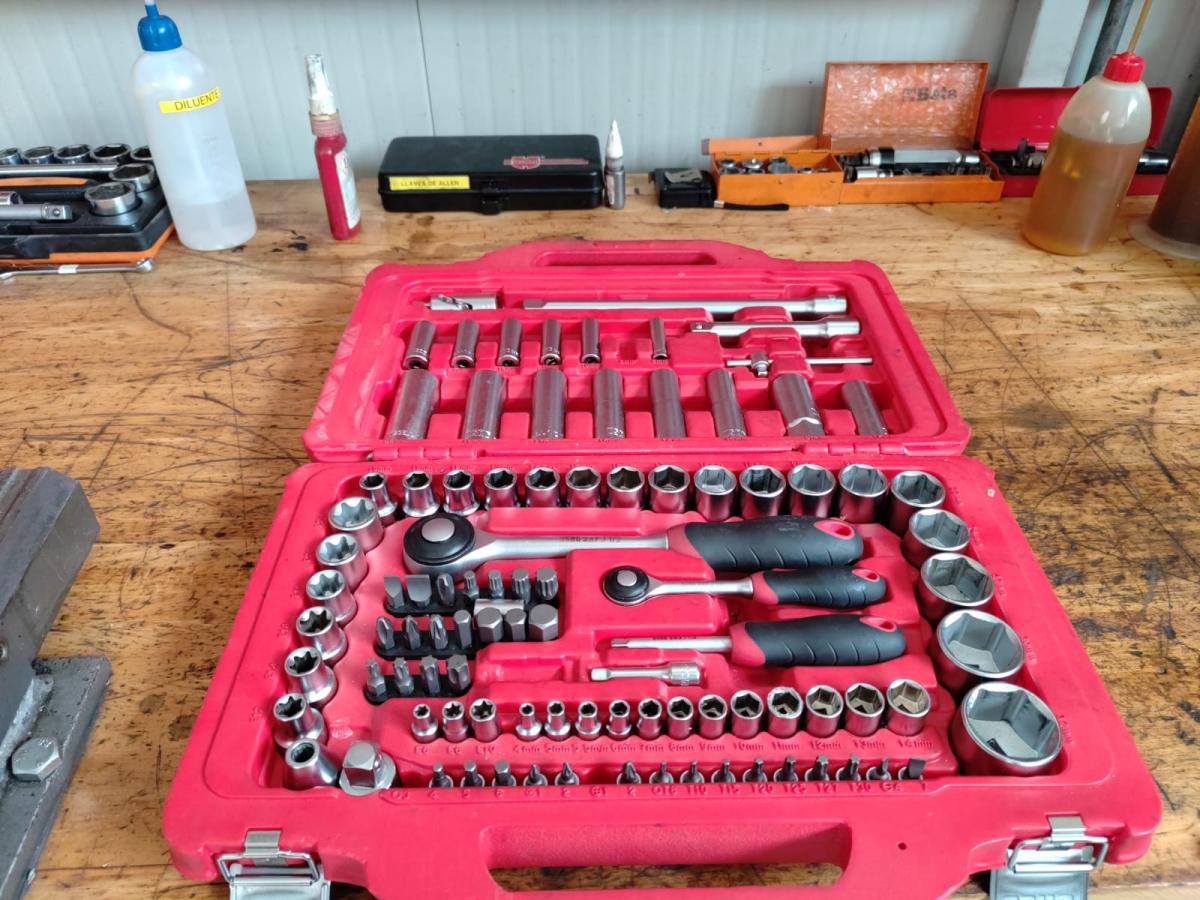
Sockets are essential, mainly used for tightening and loosening nuts and bolts. Having a complete set allows you to perform a wide range of tasks on the motorcycle. They come in various types, each suited to specific mechanical needs. Standard sockets, with 1/4, 3/8, and 1/2 inch drives, are indispensable for most basic operations, such as tightening engine bolts or securing frame components. Deep sockets are ideal for reaching nuts located in difficult positions or protruding ones and for installing spark plugs. Torx and hex sockets are crucial for specific motorcycle components that require precision tools.
Wrenches
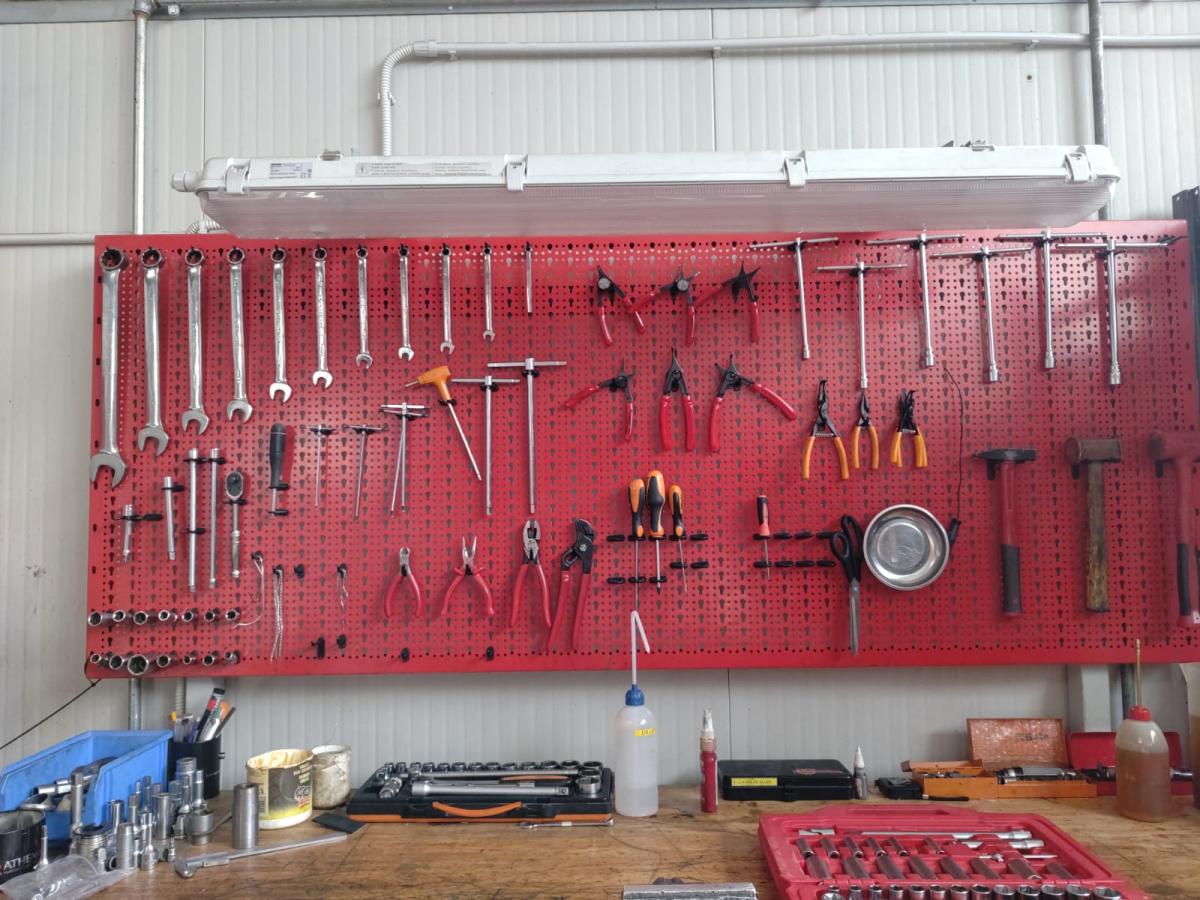
A set of wrenches of different lengths can always come in handy to reach even the most hidden screws. Like sockets, wrenches are fundamental for tightening and loosening nuts and bolts. A complete set, including combination wrenches, Allen keys, T-wrenches, open-end, and box-end wrenches, is what every enthusiast needs as they allow working on a wide range of components with precision. Combination wrenches are ideal for most routine mechanical work, such as tightening frame bolts or securing engine components. Allen keys are essential for bolts on flat surfaces and are often used for transmission system and accessory work. A kit cannot be complete without common wrenches, ranging from 8 to 15 mm, for loosening and tightening the most common screws, nuts, and bolts on motorcycles.
Screwdrivers
Screwdrivers are used to tighten and loosen the numerous screws on a motorcycle. To ensure everything is tight and functional, you need a wide assortment of screwdrivers with Phillips, flat, cross, slotted, and star tips, with long and short shafts. It's important to choose screwdrivers with ergonomic handles for comfort, magnetic heads to avoid losing small screws in the engine crevices. Screwdrivers have multiple applications: for the bodywork, they are used to fasten and remove plastic or metal side panels, as well as the front and rear fenders. They are also indispensable for maintaining headlights, switches, and buttons on the handlebar for lights, indicators, and starting and much more.
Pliers
Pliers are versatile tools that can be used in various ways, and an ideal set includes long-nose pliers, adjustable pliers, locking pliers, and wire cutters. Long-nose pliers can be used to remove and reinstall fuel hoses and are essential for removing clamps securing the fuel filter. Smaller pliers are useful for removing fuses without damaging them. In the transmission chain, pliers are used to remove or replace chain clips during maintenance and to open and close chain links.
Assortment of Screws and Bolts
Having a variety of screws and bolts at home is indispensable to always have what you need on hand. They are critical products for building, assembling, maintaining, and repairing a motorcycle, ensuring that all components are securely fastened and functioning properly. They are fundamental for securing structural parts like the frame and engine mount, in the braking system, they are used to mount brake calipers and discs as well as wheels and tires. They are also used to secure many other parts like the handlebar and its electronic and non-electronic controls, brake and clutch levers, and everything that forms the motorcycle. During maintenance and repair operations, bolts and screws are often removed and reinstalled; it is therefore essential to use the correct fasteners to avoid safety and performance issues.
Copper Washers
Copper washers are used as seals in threaded joints, connections, and plugs to prevent fluid leaks like oil and fuel. The ability of copper to slightly deform allows them to create reliable seals, essential in braking and cooling systems. We recommend purchasing a set of copper washers of various sizes to always have on hand, as you never know when they might come in handy.
Telescopic Magnet
A telescopic magnet is a useful tool for reaching, positioning, and removing small metal objects in hard-to-reach spaces. When working on a motorcycle, it's common for screws, bolts, or washers to fall into difficult-to-reach areas; a telescopic magnet allows you to easily retrieve these components without having to disassemble further parts of the motorcycle. Additionally, if a metal tool slips from your hands and ends up in an inconvenient spot, the telescopic magnet can help retrieve it without complicated disassemblies. Some telescopic magnets come with LED lights, useful for illuminating dark and narrow spaces, making it easier to inspect hard-to-see areas.
Flashlight
When working on your motorcycle, good lighting is essential to ensure precision and safety. LED flashlights offer intense and clear light, allowing you to see every detail even in the less illuminated areas of the garage. We recommend choosing flashlights with a flexible arm or magnetic base for maximum versatility, making it easier to illuminate hard-to-reach parts or positions that are not easily visible during maintenance and repair operations.
Compressor
A compact compressor, complete with an air gun, pneumatic gun, and precision gauge, is what you need. Besides inflating tires, the compressor is useful for cleaning hard-to-reach mechanical parts. A compressor with a gauge is useful for checking and ensuring that tire pressure is always optimal, ensuring grip and safety, especially on rough terrains.
Tool Storage
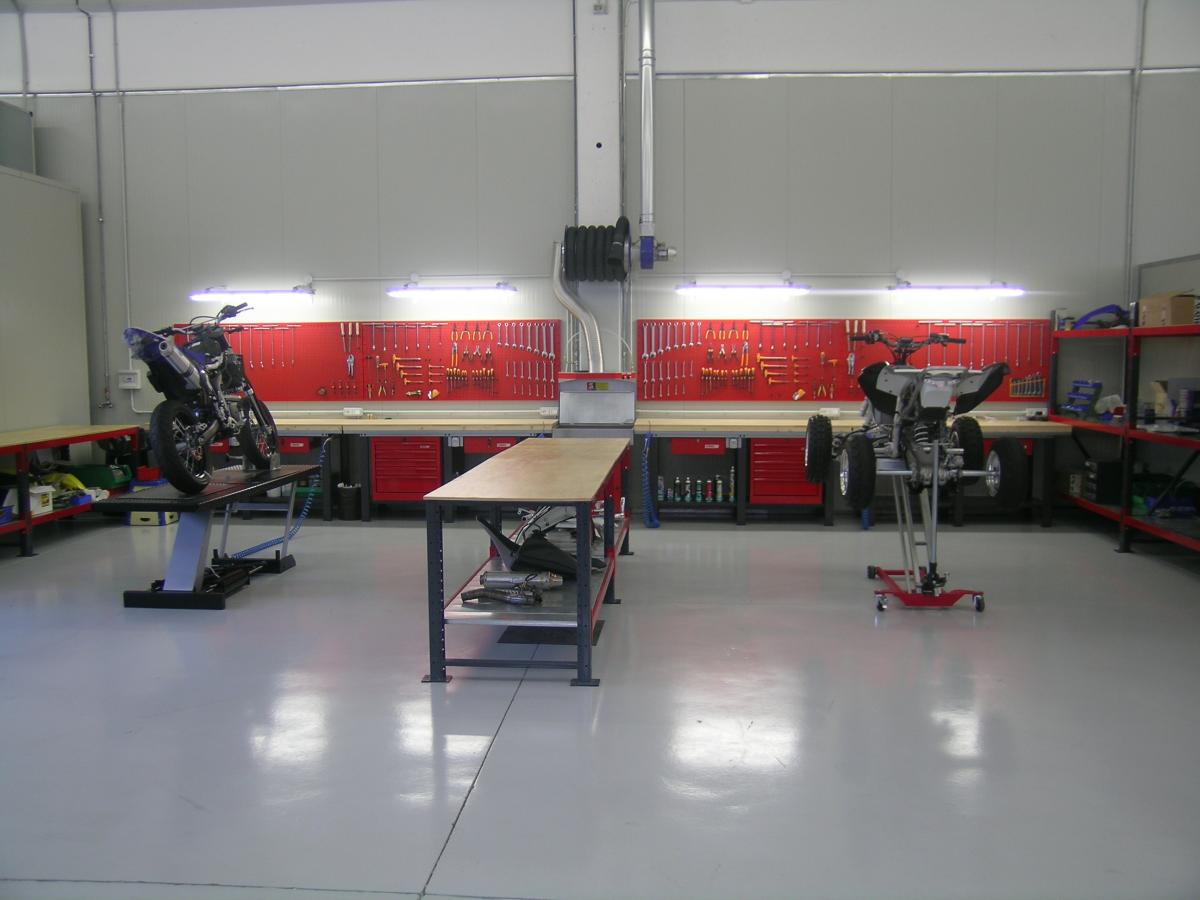
To organize the tools in your garage, it is useful to use two complementary systems: a cart with drawers and a wall-mounted tool panel. The cart is ideal for storing tools of different sizes that you don't use daily or cannot hang. The tool panel allows you to hang frequently used tools like screwdrivers, hammers, and pliers. It is essential to have a small box for storing screws, bolts, and other small pieces that might come in handy in the future. Additionally, it is advisable to have a feeler gauge, a precision instrument consisting of various blades, ideal for accurately measuring the distance between contact points, surfaces, or gaps. Lastly, it's advisable to have a container for used engine oil, along with a variety of liquids, sprays, and specific solvents for cleaning and maintaining various motorcycle components, both mechanical and electrical, like the chain, battery, brakes, and carburetor.
Workshop Manuals
Don't forget to keep the user and maintenance manual of your motorcycle. It will be useful for consulting the tightening of screws and bolts, ensuring that each intervention is performed correctly and ensuring that your motorcycle maintains safety and performance over time. With the specific manual for your motorcycle on hand, you'll always have a reliable guide to perform precise and safe interventions.
Advanced Tools: Expert Equipment
For those with experience and advanced skills, there are specific tools that allow for more complex and detailed work. Here is what should not be missing in the kit of a true enthusiast:
Hammer
In motorcycle maintenance and repair, the importance of using appropriate hammers becomes evident to avoid damaging surfaces. You'll need three types of hammers: rubber, copper, and iron. The rubber hammer will be useful when installing sensitive components where force is needed without risking damage. The copper hammer is useful for work where percussion on steel materials is required (e.g., crankshaft) where the percussion impact will deform the copper while keeping the struck object intact, while the iron hammer is useful for work where there is no risk of damaging components, useful for example with a punch to bend safety washers.
Torque Wrench
The torque wrench, also known as a torsiometer, is used to tighten each screw and bolt to the correct torque, or with the right force. This prevents bolts from being too tight or too loose, avoiding thread damage and ensuring that components do not loosen during road or off-road driving. It is essential to use a torque wrench to secure the structural parts of the motorcycle, like brake calipers, steering plates, footrests, rear subframes, and much more. There are various types of torque wrenches with different maximum torque ranges. For long-lasting use without needing to buy more than necessary, we recommend a click torque wrench from 5 to 60 N/m.
Digital Caliper
The digital caliper is used to measure and ensure the precision and integrity of numerous motorcycle components, helping maintain the vehicle's safety and reliability. There are different types of calipers, such as vernier, dial, and digital calipers, each with varying levels of precision. For maximum accuracy and ease of use, we recommend the digital caliper: with it, you can measure the internal diameter of cylinders to check for wear or see how much friction material remains on brake pads.
Digital Multimeter
To perform efficient and accurate electrical diagnostics on your motorcycle, the digital multimeter is what you need. This device allows you to quickly, easily, and independently identify any electrical issues, reducing the need for immediate professional interventions. With a digital multimeter, you can measure the battery voltage to check its charge level, verify the status of fuses, check the proper functioning of lights, and much more.
Lift
Finally, if you have the space in your garage, consider purchasing a motorcycle lift. Working on a motorcycle on an unstable side stand can be frustrating and dangerous. A lift offers a stable and secure platform, making it easier to access all parts of the motorcycle and increasing safety during maintenance. With it, you can perform maintenance on your motorcycle comfortably standing up, eliminating the need to bend over. This prevents back pain and makes it easier to access hidden areas or components at the bottom, usually hard to reach when both wheels are on the ground.
Building and organizing your garage for DIY motorcycle maintenance is no easy task. It requires preparation and an initial investment, but above all, passion and commitment. Not only does it allow you to save on maintenance costs, but it also gives you the opportunity to become uniquely familiar with your motorcycle. With determination and patience, you can transform your space into a perfect environment to take care of your bike.
Modificato il 16 February 2026


Ask the expert
-
 Ask the expertMoto
 -
 Ask the expertAuto
 -
 Ask the expertMoto