

Motorcycle Fork Overhaul: How and When
Motorcycle forks are one of the most crucial elements of a motorcycle as they directly impact safety and riding pleasure. Correct and regular maintenance and overhauls should be a priority for every biker, whether on-road or off-road.
Specifically, the front forks and rear shock absorbers enable the motorcycle to maintain traction on the road, especially during cornering, and ensure the rider's comfort even on rough terrain. To preserve their performance over time, motorcycle forks require regular maintenance. In this article, we will cover how to perform a motorcycle fork overhaul, how to identify when it is time to do it and how often, the necessary equipment for the task, and ballpark costs for a motorcycle fork overhaul.
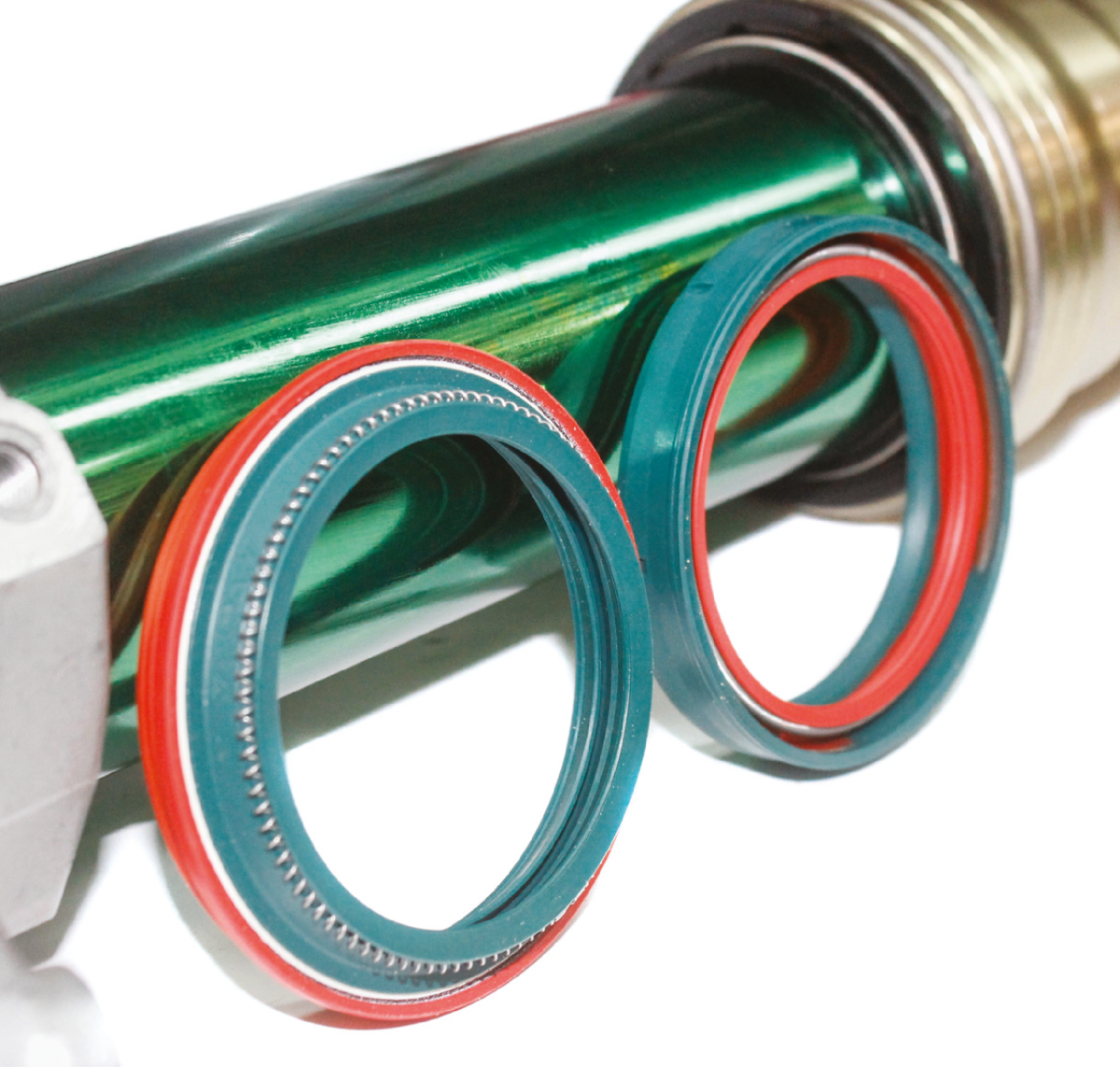
Understanding Motorcycle Forks and What They Do
Let's first understand what a motorcycle front fork is and how it is made. The fork, along with the rear shock absorber (which we won't discuss in this article), is primarily composed of two parts: the spring, which generates elastic force, and the hydraulic element, which generates viscous friction force. The elastic force is related to the compression and decompression of the spring and is the first response to dynamic events that affect the motorcycle, such as changes in posture during cornering, riding over bumps on the ground, and the stress forces generated by acceleration and deceleration. However, the spring alone has a conservative force: the energy is not dissipated but immediately returned. If we relied solely on the spring, the motorcycle would continuously and uncontrollably bounce, which is why the hydraulic element is introduced to damp this motion.
In motocross, different types of forks are used depending on the motorcycle and rider preference. The most common are closed-cartridge forks with coil springs, valued for consistent performance and easy adjustability, but there are also air forks, where air pressure replaces the traditional spring’s elastic function.
Motorcycle Fork Overhaul: How Often and Why It's Important
Fork servicing should follow the maintenance intervals recommended by the motorcycle manufacturer, which specifies in the user manual the ideal times or mileage to keep the front suspension in good condition. In general, regular maintenance helps preserve comfort, safety and riding precision, while preventing premature wear of oil seals, bushings, and hydraulic components.
But how can you tell if the forks need to be serviced? For air forks, if they show a constant loss of pressure even shortly after being inflated, it is time for servicing, which should include replacement of oil seals and O-rings, in addition to the oil change. Another clear symptom is the presence of oil on the fork tubes. Forks must move freely. If components such as dust seals, oil seals, and bushings have worn over time or due to riding conditions in highly contaminated environments (for example, off-road), they may lose their original properties, compromising the smoothness of the fork, reducing comfort, and in the most critical cases affecting the stability and control of the motorcycle.

Motorcycle Fork Overhaul: At the Repair Shop or DIY?
There are different levels of intervention when servicing a fork. The simplest operation, accessible to everyone, is cleaning the dust seal. Internal component servicing, however, should generally be performed only by someone with experience and good manual skills, or entrusted to a qualified mechanic. Replacing fork oil and the sealing and sliding components (dust seal, oil seal, and bushings) is the intermediate level: it requires some practice but is not impossible. Keep in mind, though, that if you start disassembling a fork and cannot complete the revision and reassembly correctly, you risk having to rely on a professional, or worse, damaging components and being forced to replace the entire fork.
How to Overhaul Motorcycle Forks: Equipment and Steps
Below are the simplest operations involved in fork servicing: oil replacement and the substitution of oil seals, dust seals, and bushings. Some motorcycle manufacturers include these instructions in the user and maintenance manual, and they should be followed carefully.
These procedures, when performed correctly, allow you to maintain smoothness and precision during fork compression, reducing play and friction between the tube and slider, ensuring optimal fork operation and improving riding feel and safety.
Required tools:
Socket wrench set: needed to remove the bottom cap on the fork foot
A graduated container (approx. 500 ml): used to fill the correct amount of fork oil
Specific seal drivers to install the new oil seals into the fork slider
Small flathead screwdriver for removing the snap ring that retains the oil seal
Specific octagonal wrench (depending on the upside-down fork model): used to unscrew the upper cartridge cap to remove it from the fork slider
How to Change Oil in a Closed Cartridge Fork
Here are the main steps to replace the oil, dust seal, oil seal, and bushings in a typical upside-down fork. The operation must be carried out on both fork legs to avoid different performance between them, which could compromise motorcycle stability.
Remove the fork from the motorcycle and begin disassembly from the lower cap located on the fork foot.
Drain the oil through the hole in the fork foot where the cap was removed. Use an appropriate container to collect the oil for proper disposal.
Remove the cartridge and coil spring (if present) from the slider by unscrewing the upper cap (usually requiring the specific octagonal wrench).
Remove the dust seal using a flathead screwdriver and slide it down the fork tube toward the foot.
Remove the snap ring retaining the oil seal using the flathead screwdriver and leave it on the fork tube.
Extract the oil seal by forcefully sliding the tube and slider in opposite directions repeatedly until the seal comes out.
Separate the tube from the slider and remove all components—bushings, oil seal, dust seal, washer, and snap ring—remembering the order for reassembly.
Thoroughly clean the tube and slider with products specifically designed for motorcycle suspension cleaning.
For reassembly, lubricate the tube with the same oil used for filling the fork. If a seal bullet is not available, apply tape to the tube edges to avoid damaging the new seals. Assemble components in the same order as removal and remember to remove the tape or seal bullet afterward.
Insert the tube and all components back into the slider, installing the bushing with its sliding surface using the correct driver, then the washer and oil seal until the snap ring groove is visible. Install the snap ring and then the dust seal.
Insert the cartridge and spring (if present) into the slider following the reverse order of disassembly.
With the fork upside down (foot facing upward), pour in the prescribed amount of fork oil through the hole in the foot.
Insert and tighten the bottom cap.
A properly executed overhaul restores the forks’ original performance and, when using high-quality components, can noticeably improve smoothness and damping precision. Regular maintenance ensures consistent handling and extends the overall life of the suspension system.
Athena offers a wide range of oil seal and dust seal replacement kits for forks on its website, suitable for both on-road motorcycles and motocross/off-road bikes. Each kit includes a compatibility list showing the motorcycle models for which it is suitable.
How much does a motorcycle fork overhaul cost?
As you might expect, there is no fixed price list. The longer the intervals between servicing, the more likely dirt will have damaged wear components, requiring replacement of parts that otherwise would not need it. The necessary interventions—and therefore costs—can only be determined after opening and inspecting the fork. Indicatively, a complete fork overhaul—including cleaning, tube polishing, internal cleaning of tube, slider, and hydraulic cartridge, checking tube/slider play, oil replacement, and seal and bushing replacement—can cost up to around 500 euros.
Modificato il 16 February 2026


Ask the expert
-
 Ask the expertMoto
 -
 Ask the expertAuto
 -
 Ask the expertMoto