

How to Fix an Exhaust Leak on a Motorcycle: Symptoms and Repair
An exhaust leak occurs when there is an unintended opening or damage in the motorcycle's exhaust system that allows combustion gases to escape before reaching the muffler or catalytic converter. This results in unfiltered fumes bypassing emission controls, reducing back pressure, and lowering overall performance.
Recognizing the symptoms of an exhaust leak early is crucial to prevent issues like misfires and potential severe damage to your motorcycle’s engine. Ignoring these signs can lead to reduced performance, increased wear, and costly repairs.
Keep reading to learn how to fix an exhaust leak, why Athena replacement parts are the best choice, and how to maintain your motorcycle’s exhaust system — whether you’re riding on the road or off-road — to ensure long-lasting performance and safety.
What Are the Symptoms of an Exhaust Leak?
Exhaust leaks often reveal themselves in subtle ways, typically through smell and performance issues before mechanical problems become apparent. Here are the first exhaust leak symptoms.
- A strong exhaust odor, caused by unfiltered gases escaping from the exhaust system.
- Decreased performance, such as sluggish throttle response, loss of torque, or poor fuel efficiency.
- Visible fumes, where exhaust gases may escape from poorly sealed joints, signaling a breach in the system.
In addition to these signs, however, it is an exhaust leak sound, or the noise that often makes an exhaust leak especially noticeable.
How to Recognize a Gas Leak from a Motorcycle’s Sound
The most distinct symptom of an exhaust leak is an abnormal noise. As you rev the engine, you may hear a sharp, metallic ticking or puffing sound that grows more pronounced with acceleration. This exhaust leak sound stands apart from the typical engine or muffler noise, often originating from areas like the manifold, cylinder head, or exhaust junctions.
By carefully listening for these subtle audio cues and paying attention to their intensity, especially when you accelerate or decelerate, you can catch a leak early.
What Causes an Exhaust Leak?
Exhaust leaks can develop for a variety of reasons, often related to the demanding nature of motorcycle engines and the environmental conditions in which they operate. How do you find an exhaust leak? Look for these signs when performing routine maintenance.
- Worn or damaged gaskets. Over time, crush washers and flange gaskets lose their ability to maintain a tight seal due to constant exposure to heat, pressure, and engine vibrations. As gaskets wear down, they become less effective at sealing exhaust connections, leading to leaks.
- Cracks in pipes or manifolds. The exhaust system undergoes significant thermal cycling during operation, expanding and contracting as it heats up and cools down. This repetitive stress, combined with constant vibration, can cause small cracks to form in the exhaust pipes or manifolds. These cracks may start small but can grow over time, leading to a gradual leak.
- Corrosion. Exhaust systems, especially those made from steel, are prone to corrosion. Moisture from rain, humidity, or washing the bike can accumulate over time, leading to rust. As the metal weakens, it becomes more susceptible to cracking or perforation, creating potential leak points.
- Loose bolts or brackets. The constant vibration of the engine and the exhaust system can cause bolts, nuts, or mounting brackets to loosen over time. When this happens, the exhaust system components may shift, creating gaps at the connection points where gases can escape.
Off-road motorcycles face additional challenges. Dirt bikes are constantly exposed to harsher conditions such as shocks, mud, and water infiltration. These environments accelerate wear and tear, putting more strain on gaskets and seals. The vibrations from off-road riding, coupled with impacts from jumps or rough terrain, increase the likelihood of exhaust leaks compared to road-only motorcycles.
Is an Exhaust Leak Bad for Your Motorcycle?
An untreated exhaust leak can have significant negative effects on both the performance and safety of your motorcycle. While the immediate symptoms might seem minor, the long-term consequences can be serious, affecting everything from fuel efficiency to rider safety. Here are some ways that an exhaust leak is bad for your motorcycle.
- Sensor malfunctions. An exhaust leak, particularly before the oxygen sensor, can cause it to deliver incorrect readings. This disrupts the air-fuel ratio, leading to poor combustion and reduced engine efficiency. The sensor’s role is crucial in adjusting the air-fuel mix, so a faulty reading can impact overall engine performance, causing it to run inefficiently.
- Overheating. Leaks allow hot gases to escape in unintended places, leading to increased heat around components like the valves, spark plugs, and other engine parts. Over time, this thermal stress can cause these parts to warp or deteriorate, potentially leading to long-term engine damage.
- Fuel inefficiency. When there is a leak, it reduces the back pressure in the exhaust system, which is essential for efficient combustion. With improper pressure, the engine is unable to burn fuel as effectively, causing it to consume more fuel for the same power output. This results in poor fuel efficiency, meaning you’ll need to refuel more often.
- Health risks. Exhaust leaks allow harmful gases like carbon monoxide to escape into the rider’s environment, especially near the exhaust junctions. These toxic gases can be inhaled by the rider, posing serious health risks, particularly during long rides where exposure is prolonged.
An exhaust leak is particularly dangerous because it can also lead to misfires and significant enginedamage.
Can an Exhaust Leak Cause a Misfire?
An exhaust leak before the oxygen sensor can introduce excess air into the exhaust flow, disrupting the sensor’s ability to measure the air-fuel mixture accurately. When the sensor gives incorrect readings, the engine control unit (ECU) compensates by leaning out the mixture, causing inefficient combustion.
This imbalance can lead to misfires, which occur when the engine fails to ignite the air-fuel mixture properly in one or more cylinders. Misfires can result in a rough-running engine, noticeable stalls, and poor throttle response. These issues are particularly noticeable during acceleration or deceleration when the engine is under load, causing a loss of power and stability.
Will an Exhaust Leak Damage a Motorcycle’s Engine?
An exhaust leak can cause significant damage to your motorcycle’s engine if left unresolved. The leak allows hot gases to escape in unintended areas, increasing the temperature around sensitive components like valves, gaskets, and spark plugs. Over time, this thermal stress can lead to warped metal or deteriorated seals, which compromises the overall integrity of the engine.
For dirt bikes, this is even more critical. The absence of proper back pressure reduces the engine’s ability to operate efficiently, leading to decreased power output and a higher likelihood of long-term engine wear. The reduced combustion efficiency also puts extra strain on internal components, potentially causing further damage or even engine failure if the leak persists for too long.
Can You Drive or Ride with an Exhaust Leak?
Riding with an exhaust leak, even a minor one, is not recommended. Although it might be possible to cover short distances, the risks associated with leaking gases near the rider are significant. Over time, even small leaks can worsen quickly, leading to more severe issues.
If the leak is near the engine or under the seat, it's crucial to stop riding immediately and repair it. In the case of a minor leak that requires a trip to a workshop, proceed with caution and avoid prolonged use to prevent further damage or safety hazards.

How to Fix an Exhaust Leak on a Motorcycle: Step-by-Step Guide and Required Tools
Fixing a motorcycle exhaust leak is a task that many riders can manage with the right tools and some patience. For most leaks, you’ll need a socket wrench set, a torque wrench, a wire brush, replacement gaskets, and clamps, along with some anti-seize compound for easier future maintenance.
The difficulty of repairing an exhaust leak can vary based on the location of the leak. For example, leaks near accessible parts, like the exhaust joints or gaskets, are generally easier to fix. However, if the leak is in harder-to-reach areas, such as cracks in the exhaust pipes or welds, the repair becomes more complex and may require professional help.
Attempting these more complicated repairs without the proper skills and tools can lead to further damage. For leaks involving cracked pipes or welds, professional repair is strongly recommended.
How Do You Find an Exhaust Leak on a Motorcycle?
If you suspect an exhaust leak, the first thing you need to do is locate it. Start with a visual inspection of the exhaust system. Carefully check the joints, seals, welds, and any areas where components are connected. Look for signs of damage like cracks or soot buildup. If you notice dark spots or soot around these areas, it’s a strong indication that exhaust gases are leaking.
Next, try the soapy water test. While the engine is running, spray soapy water on the suspected leak areas. If there’s a leak, the escaping air will cause bubbles to form, making it easy to spot the exact location of the problem.
For harder-to-find leaks, a smoke test can be very effective. By introducing smoke into the exhaust system, you can see where the smoke escapes, clearly revealing any leaks, especially those that are difficult to spot with just the eye.
If you’re working with a dirt bike, be extra cautious around header joints and gaskets, as these parts are more vulnerable to wear and tear. The constant vibrations, impacts, and exposure to mud and water make these areas prone to leaks, so it’s important to inspect them thoroughly.
How to Repair an Exhaust Leak on a Motorcycle
Once you’ve located the leak and gathered the necessary tools, you can proceed with the repair. One final recommendation before you begin is to ensure the motorcycle is completely cold, as exhaust components can remain hot for a while after the engine is off. Follow the following steps to repair the exhaust leak.
- Disassemble the affected sections. Begin by loosening any clamps and removing heat shields or other components that are blocking access to the area with the leak. Detach sections of the exhaust system, such as the header pipe, mid-pipe, or muffler, to reach the damaged components.
- Remove damaged components. Once you've exposed the leak area, remove any worn or faulty parts, including gaskets, washers, or flanges. Never reuse old gaskets, as they lose their sealing ability over time.
- Clean mating surfaces. After removing the damaged components, use a wire brush or sandpaper to clean the mating surfaces. This will remove any rust, soot, and old gasket material, ensuring the surfaces are flat, clean, dry, and free of oil, which is essential for a proper seal.
- Replace gaskets, washers, or flanges. Install new, high-quality gaskets or other necessary parts. For dirt bikes or motorcycles subjected to heavy vibrations, use reinforced gaskets, such as those from Athena, designed to handle constant stress.
- Reassemble the exhaust system. Reattach the components and tighten the bolts according to the manufacturer’s torque specifications. Be sure to tighten bolts in a crisscross pattern to apply even pressure and prevent warping.
- Use lock washers or thread locker. Where recommended, apply lock washers or thread locker to prevent bolts from loosening due to vibrations.
- Test for leaks. Start the engine and let it idle, listening carefully for abnormal sounds such as ticking or hissing. This will help you confirm that the leak has been properly sealed.
- Recheck bolts and joints after a short ride. After a short ride, recheck the bolts and joints, as components may settle over time. Ensure everything is securely tightened to avoid further issues.
Recommended Exhaust Parts and Kits from Athena
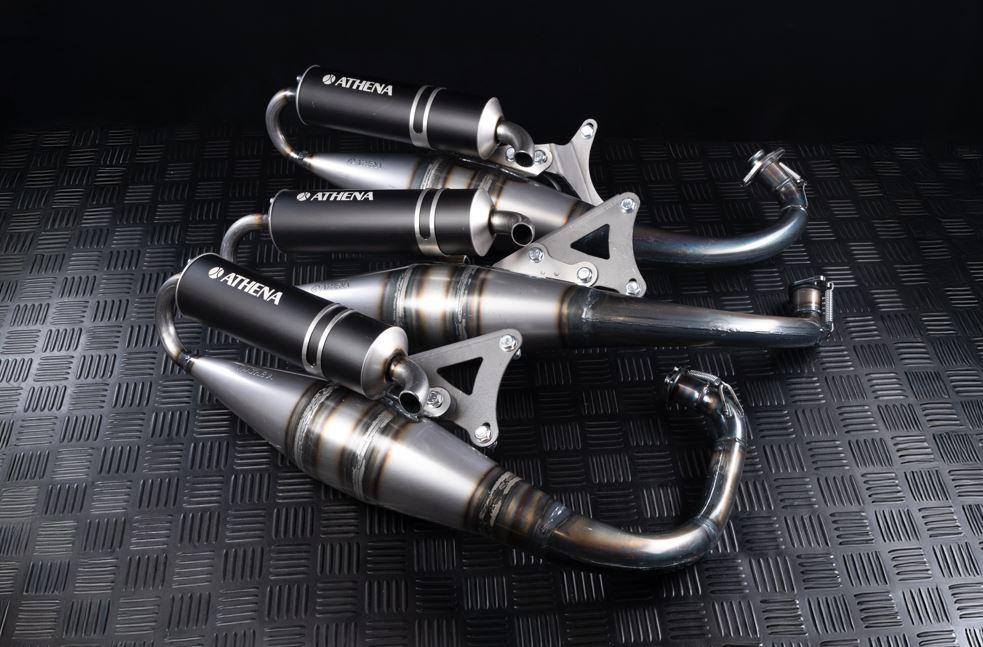
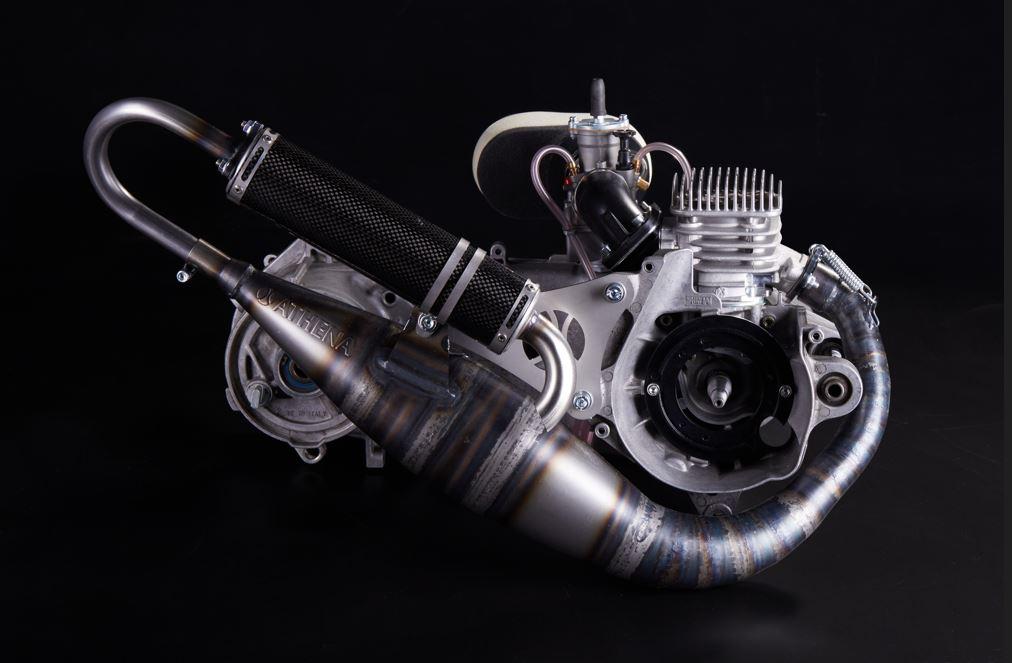
Athena offers a comprehensive range of exhaust components that are ideal for addressing and preventing exhaust leaks in both road and off-road motorcycles. Their exhaust manifolds, exhaust pipes, mufflers, and gaskets are engineered for durability, thermal resistance, and easy installation, making them an essential part of any repair or maintenance routine.
Exhaust manifolds and exhaust pipes from Athena are designed to provide a tight seal and maintain proper exhaust flow, preventing gases from escaping where they shouldn’t. These parts are built to resist the stresses of high temperatures and vibrations, which are common causes of leaks.
For added protection and to prevent leaks from reoccurring, Athena’s exhaust gaskets offer a high-quality seal that ensures the system stays airtight. These gaskets are designed to withstand the heat and pressure in the exhaust system, reducing the risk of gaps where gases can escape. Additionally, the fiberglass for exhaust pipes provides extra insulation, which helps maintain the system’s integrity and protects against heat buildup that could lead to component failure or leaks.
In cases where you need to temporarily seal sections of the exhaust system, muffler plugs are a reliable solution, helping to block leaks and protect the system until a permanent fix is made. Lastly, mufflers from Athena are designed to not only improve performance but also to ensure that gases are properly channeled, reducing the chances of exhaust leaks in the muffler area.
By using Athena’s high-quality exhaust components, you’re ensuring a long-lasting, leak-free system that enhances performance, reduces maintenance issues, and keeps your motorcycle running smoothly.
How to Prevent Exhaust Leaks
Preventing exhaust leaks is largely about staying on top of routine maintenance and using high-quality components. Regularly checking joints, gaskets, and bolts is essential to catch any wear or damage before it leads to a leak. It's also important to replace gaskets at the recommended intervals, as they can lose their sealing ability over time.
Using high-quality, heat-resistant hardware is key to ensuring the exhaust system remains secure and functional. For riders who take their bikes off-road, it’s especially important to inspect exhaust components after each ride, as the impacts and rough conditions common in off-road environments can cause wear and make leaks more likely.
By investing in professional-grade components — like Athena’s reinforced gaskets — riders can prevent performance loss, safeguard their engines, and enjoy a safer, more reliable riding experience.
Modificato il 16 February 2026


Ask the expert
-
 Ask the expertMoto
 -
 Ask the expertMoto
 -
 Ask the expertMoto